
From Hippocrates to Dermophthalmology – 2,500 Years of Evolution of the Eye’s Most Overlooked Organ
Introduction – The Eyelid as the Hidden Protagonist
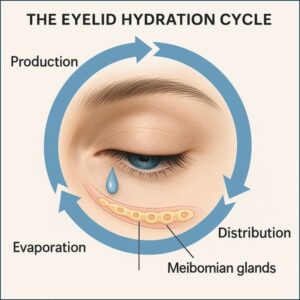
The eyelid is not merely a covering of the eye; it is an active organ that regulates temperature, humidity, and visual clarity. Each blink acts as a micro-hydration pump, spreading and renewing the tear film over the ocular surface [McMonnies 2020, Clin Exp Optom]. Even the slightest disturbance in this rhythm leads to tear-film instability, inflammation, and blurred vision. The eyelid is therefore the natural hydration regulator of vision. Understanding its function is key to preventing and treating dry-eye disease.
From Antiquity to Today – The Evolution of an Idea
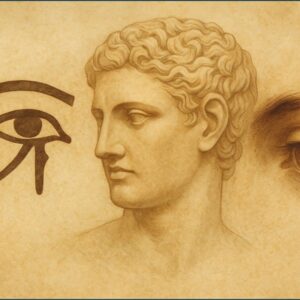
From Ancient Egypt and the Eye of Horus to Hippocrates, the eyelid was associated with light, life, and spiritual clarity. Galen called it “the guardian of the eye” (De Usu Partium, Book XI). During the Renaissance, artists and anatomists realized that the position of the eyelid determines the vitality and expressiveness of the gaze. Modern micro-anatomy has since revealed the eyelid as a multilayered biological system — skin, muscles, glands, and lashes in perfect synergy.
Anatomy and Physiology of a Marvel
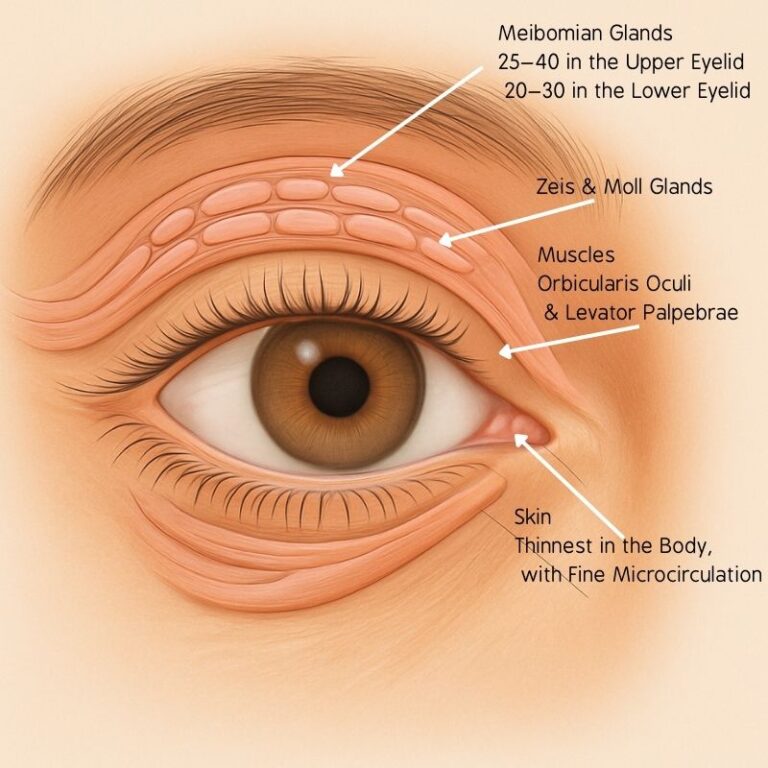
- Meibomian glands: 25–40 in the upper and 20–30 in the lower lid; secrete the lipid layer of the tear film [Knop et al., Exp Eye Res 2011].
- Zeis & Moll glands: secrete protective oils and proteins.
- Muscles: orbicularis oculi and levator palpebrae control lid motion with micrometric precision.
- Skin: the thinnest of the body, with exceptional micro-circulation.
Every blink performs a micro-massage that stimulates glandular flow, renews the tear layer, and cleanses the lid margin [Dartt & Willcox 2013, Exp Eye Res].
The Eyelid as a Hydration Regulator of Vision
Global literature has focused on tear-film stability (TFOS DEWS II 2017 [Craig et al., Ocul Surf]) and Meibomian Gland Dysfunction (MGD), but not on the eyelid as an active hydration organ.
Dermophthalmology places the eyelid at the center of the system:
· it produces the lipid tear layer,
· regulates temperature and airflow,
· distributes hydration with every blink,
· removes debris and toxins.
The eyelid is the biological thermostat and humidifier of the eye. Without its proper function, no drop can restore visual stability.
Eyelashes and the Aerodynamics of Vision
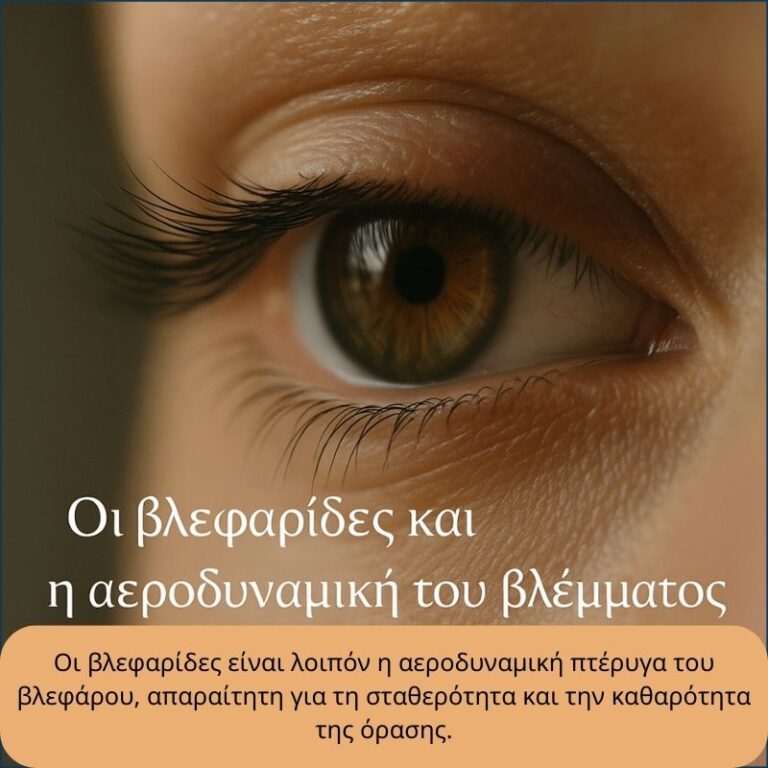
Eyelashes reduce tear evaporation by up to 50 % [Mitchell et al., J R Soc Interface 2015; 12:20141294]. They create an air-tunnelling effect — a zone of low airflow above the cornea that shields it from dust and turbulence. Their curvature maintains optical humidity; loss or deformation induces evaporative stress. Eyelashes are therefore the aerodynamic wings of the eyelid, essential for the stability and clarity of vision.
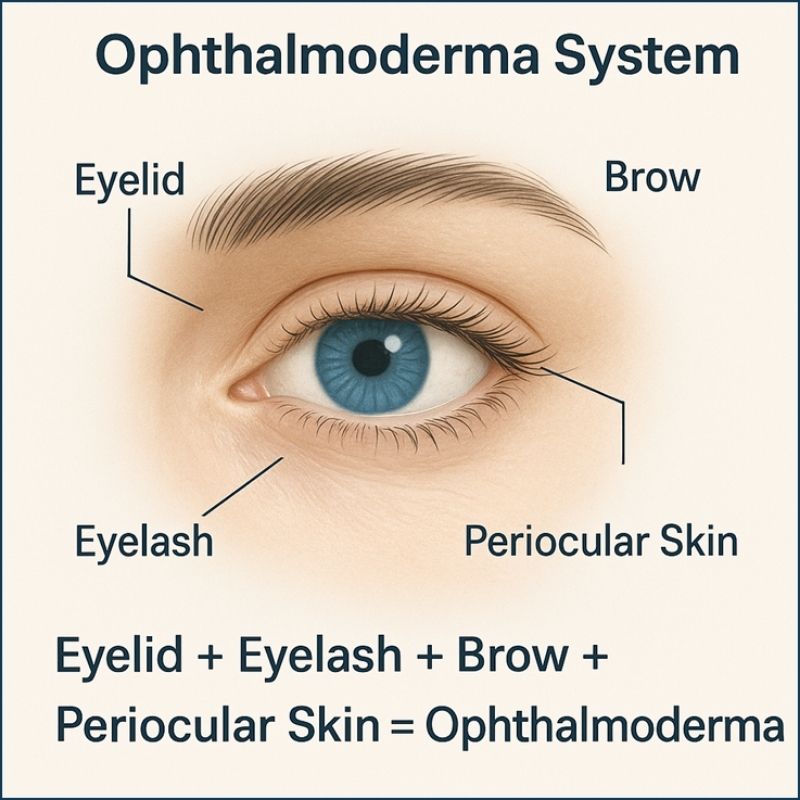
The Ophthalmoderma – The Unified System of the Eye
Dermophthalmology introduces the term Ophthalmoderma to describe the unified system of eyelids, eyelashes, eyebrows, and peri-ocular skin. Its condition determines tear-film stability, expressiveness, and quality of life. This approach is founded on inter-specialty collaboration. Dermatologists manage inflammatory conditions such as rosacea, seborrheic dermatitis, or psoriasis that often affect the lids, while ophthalmologists remain responsible for visual function, understanding the intricate link between glands, nerves, and the ocular surface.
Dermophthalmology unites ophthalmology and dermatology into a single framework of prevention and wellness.
The Philosophical and Cultural Dimension
From Hippocrates to Plato, the eye was “the mirror of the soul” and the eyelid its regulator of light. In Eastern medicine, eyelid motion reflects the flow of Qi energy. Modern Dermophthalmology revives this ancient wisdom through science: the eyelid is the organ that harmonizes light, sensation, and life.
The New Therapeutic Logic of Dermophthalmology
Approximately 86 % of dry-eye cases are due to Meibomian Gland Dysfunction (MGD) [Geerling et al., Ocul Surf 2022]. Management must start with the cause — the eyelid — not merely the symptom.
Treatment Steps
Thermotherapy & massage to restore glandular flow (e.g., Ophthalmogen Eye10 compresses, 40 °C / 20 min).
Lid cleansing & hydration with dermophthalmic formulations rich in Tea Tree Oil and Hyaluronic Acid (Ophthalmogen Gel, Spray).
Artificial tears as complement, not substitute.
Principle: Regulate the mechanism first — hydrate the outcome second.
This approach does not compete with pharmacology; it completes it, establishing a new paradigm of medical hygiene and prevention.
International Continuity and Integration
TFOS, AAO, and ESCRS laid the foundations of ocular-surface science. The World Organization of Dermophthalmology (WOD) proposes the next step — the eyelid-centered model, extending research to the interplay of skin, lids, lashes, and tear film. This unifying view bridges medical and aesthetic sciences, positioning Dermophthalmology as the natural evolution of Ophthalmology.
“Dermophthalmology unites what medicine had separated: the eye and the skin, function and beauty, physiology and perception.”
Significance of This Article – Toward a New Medicine of Light
This article scientifically establishes Dermophthalmology as a new medical field. For the first time, the eyelid is defined as a hydration regulator of vision, and the Ophthalmoderma is recognized as a vital anatomical unit.
Dermophthalmology:
- continues the work of Hippocrates in the 21st century,
- unites vision and skin, science and aesthetics,
- promotes preventive medicine through daily eyelid hygiene,
- and highlights Greece as the birthplace of this holistic perspective.
Dermophthalmology is the natural evolution of Ophthalmology — the science that unites the clarity of vision with the clarity of being.
Selected References
Craig JP et al., TFOS DEWS II Report. Ocul Surf 2017 | Mitchell BG et al., J R Soc Interface 2015 | Knop E et al., Exp Eye Res 2011 | Dartt DA & Willcox M, Exp Eye Res 2013 | Geerling G et al., Ocul Surf 2022 | McMonnies CW, Clin Exp Optom 2020 | Tsakalos J et al., Dermophthalmology White Paper, WOD Press 2025 (in press).
Authorship
Text by the World Organization of Dermophthalmology (WOD) in collaboration with Breath Purity and the Ophthalmogen Scientific Team. (For educational and scientific purposes.)